Why Repotting Matters
Most houseplants need repotting every one to two years, though fast growers may push that timeline shorter. When roots begin circling the bottom of the pot, poking out of drainage holes, or lifting the plant above the soil line, the plant is telling you it has outgrown its home. A root-bound plant struggles to take up water and nutrients efficiently, which shows up as slow growth, yellowing leaves, or soil that dries out almost immediately after watering.
Repotting into a container one size larger, with fresh substrate suited to the plant's needs, gives the root system room to expand and resets the nutrient supply in the growing medium.
Choosing the Right Soil Mix
Not all potting mixes are created equal, and using the wrong one is one of the most common reasons houseplants decline after repotting. A moisture-loving tropical plant needs a mix that holds some water while still draining freely; a succulent or cactus needs something much grittier that dries out quickly between waterings.
At My Jungle Roots we stock substrate blended for different plant types, so you are not guessing at ratios. If you bring your plant in, our team can recommend the right mix on the spot and pot it up for you the same day on many repotting requests.
Matching the Pot to the Plant
A pot is not just a container; it affects how quickly soil dries, how stable the plant sits, and how the whole thing looks on a shelf or windowsill. A few things to keep in mind:
- Size: Go up roughly 5 cm (2 inches) in diameter from the current pot. Too large a pot holds excess moisture around the roots and raises the risk of rot.
- Drainage: Always choose a pot with at least one drainage hole, or use a nursery pot inside a decorative cachepot.
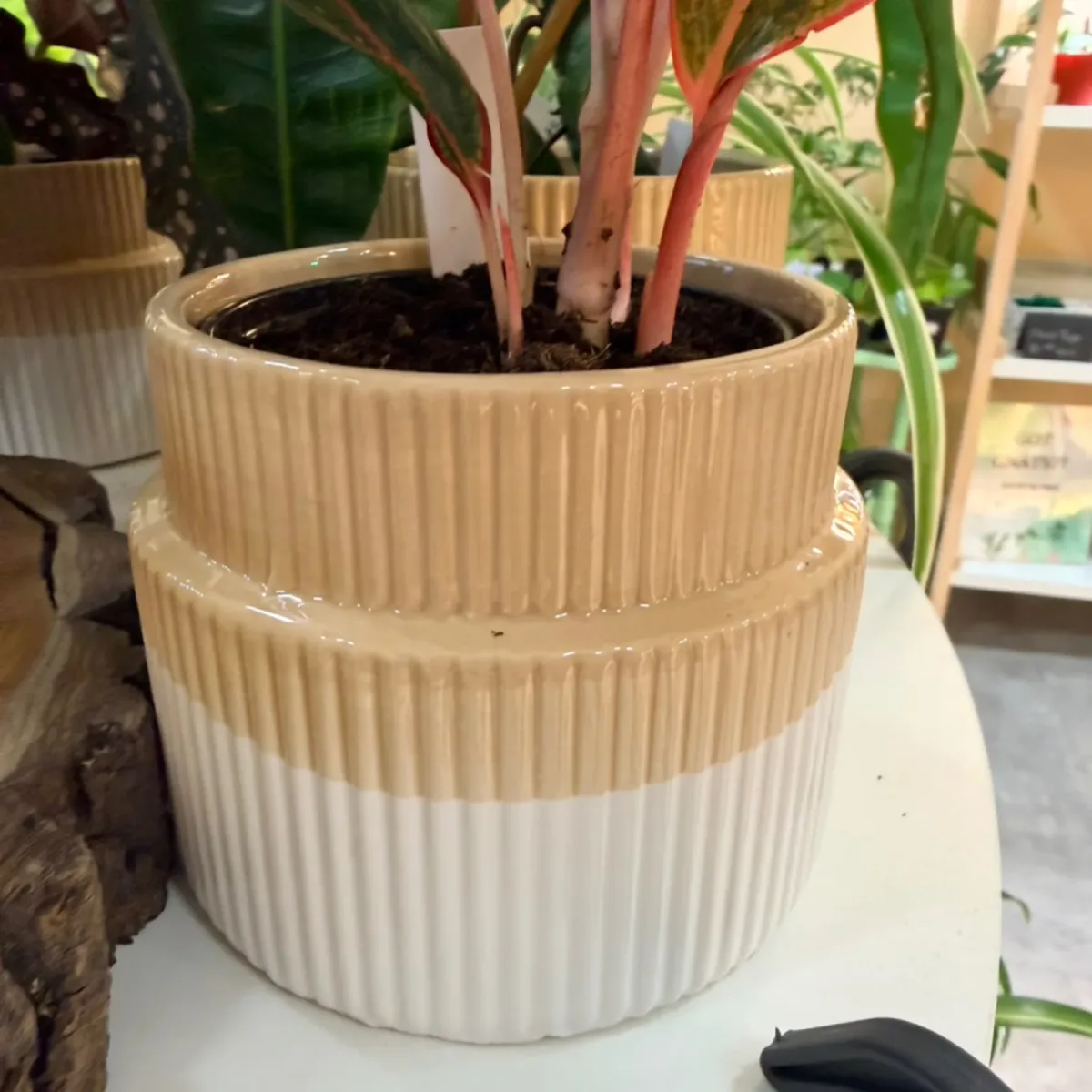
- Material: Terracotta breathes and dries faster, which suits drought-tolerant plants. Glazed ceramic retains moisture longer, which works well for thirsty tropicals.
- Weight: Heavier ceramic pots add stability for tall or top-heavy plants.
Our pots collection includes ceramic options in a range of sizes and finishes, chosen to complement the plants we carry rather than clash with them.
Reducing Transplant Shock
Even a well-executed repot causes some stress. Here is how to help your plant settle in:
- Water thoroughly right after repotting, then let the soil dry down to the appropriate level for that plant type before watering again.
- Keep the plant out of direct sun for a week or two while it adjusts.
- Hold off on fertilizing for four to six weeks; fresh substrate already contains nutrients, and adding more too soon can burn tender new roots.
- Expect some drooping or a pause in growth for the first week or two; this is normal and usually resolves on its own.
Shopping Our Full Plant and Pot Range
If you are starting fresh rather than repotting an existing plant, pairing a new plant with the right pot from the beginning saves a step later. Browse our full shop for what is currently in stock, including new arrivals that rotate regularly. If you are looking for something specific and are not sure whether we carry it, the easiest approach is to visit us in Hanover or reach out through our help page.
For customers in Owen Sound, Kincardine, Port Elgin, Walkerton, and the surrounding Bruce and Grey County area, the shop is a 30-60 minute drive away, or we ship Mondays across Canada. Winter orders go out with heat packs to protect plants in transit. For details on what shipping costs, see our shipping rates.