Sunlight
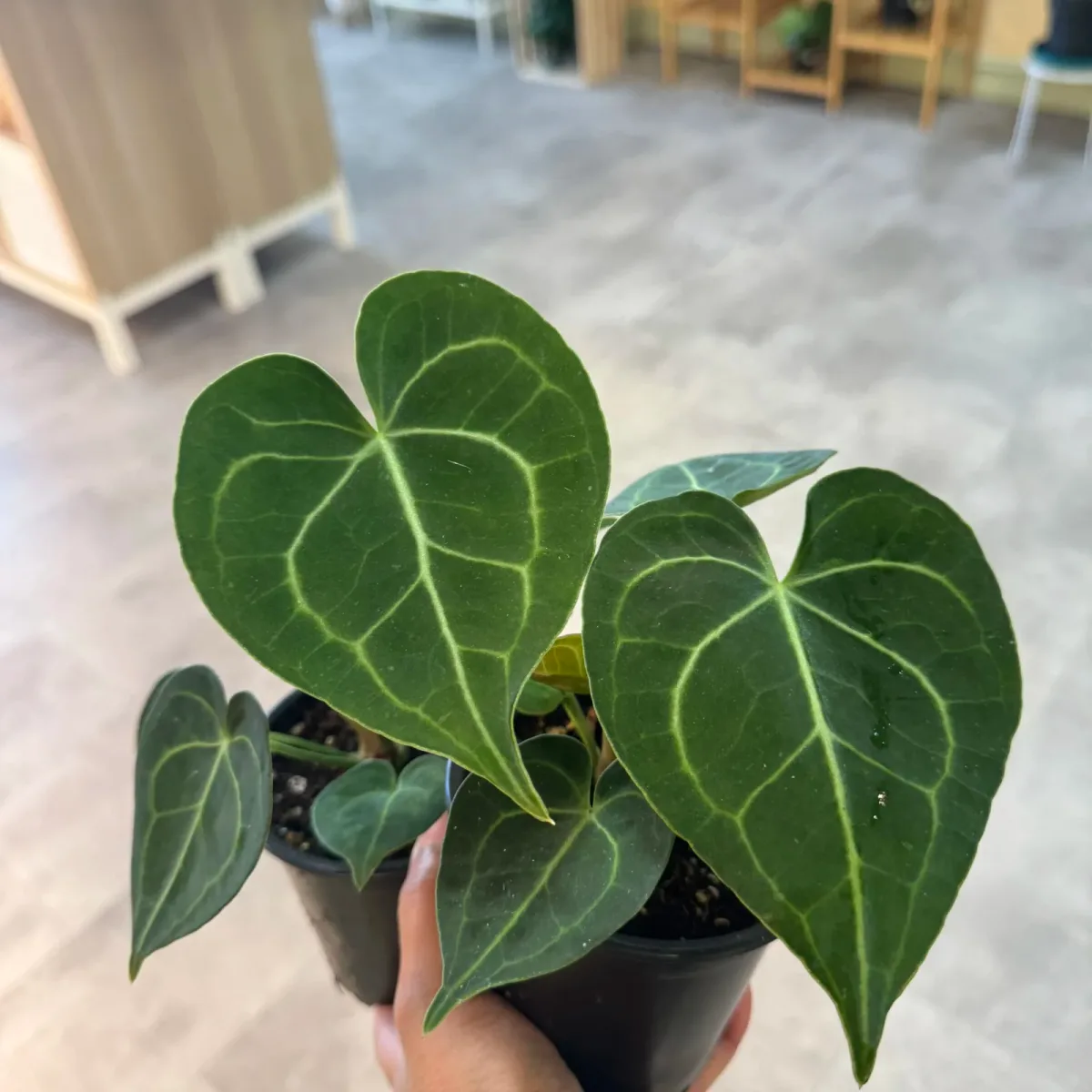
Anthuriums prefer bright indirect light, ideally within a metre or two of a window with filtered sun. Direct sunlight will scorch the leaves and fade the colourful spathes, while too little light results in sparse blooming and slow growth. An east- or west-facing window is an excellent spot for most of the year.
Water
Water when the top half of the soil is dry, then water thoroughly and allow excess to drain freely from the pot. Anthuriums are sensitive to both overwatering and drought; soggy soil leads quickly to root rot, while extended dryness stresses the plant and reduces flowering. In winter, ease back on watering slightly as growth slows.
Toxicity
Toxic to cats, dogs, and humans. All parts of Anthurium contain insoluble calcium oxalate crystals, which cause intense burning and irritation of the mouth, lips, and throat upon contact or ingestion, along with drooling, pawing at the mouth, and difficulty swallowing. Keep this plant out of reach of pets and children at all times. If ingestion is suspected, contact your veterinarian or nearest emergency animal hospital right away.
Common Problems
Yellowing leaves are the most common issue and typically point to overwatering or poor drainage; always check that your pot has a drainage hole and that the soil is not staying wet for extended periods. Brown leaf tips usually signal low humidity or inconsistent watering, so place the pot on a pebble tray with water or run a nearby humidifier. Scale insects and mealybugs occasionally target Anthuriums; inspect the undersides of leaves regularly and treat early infestations with insecticidal soap or neem oil.