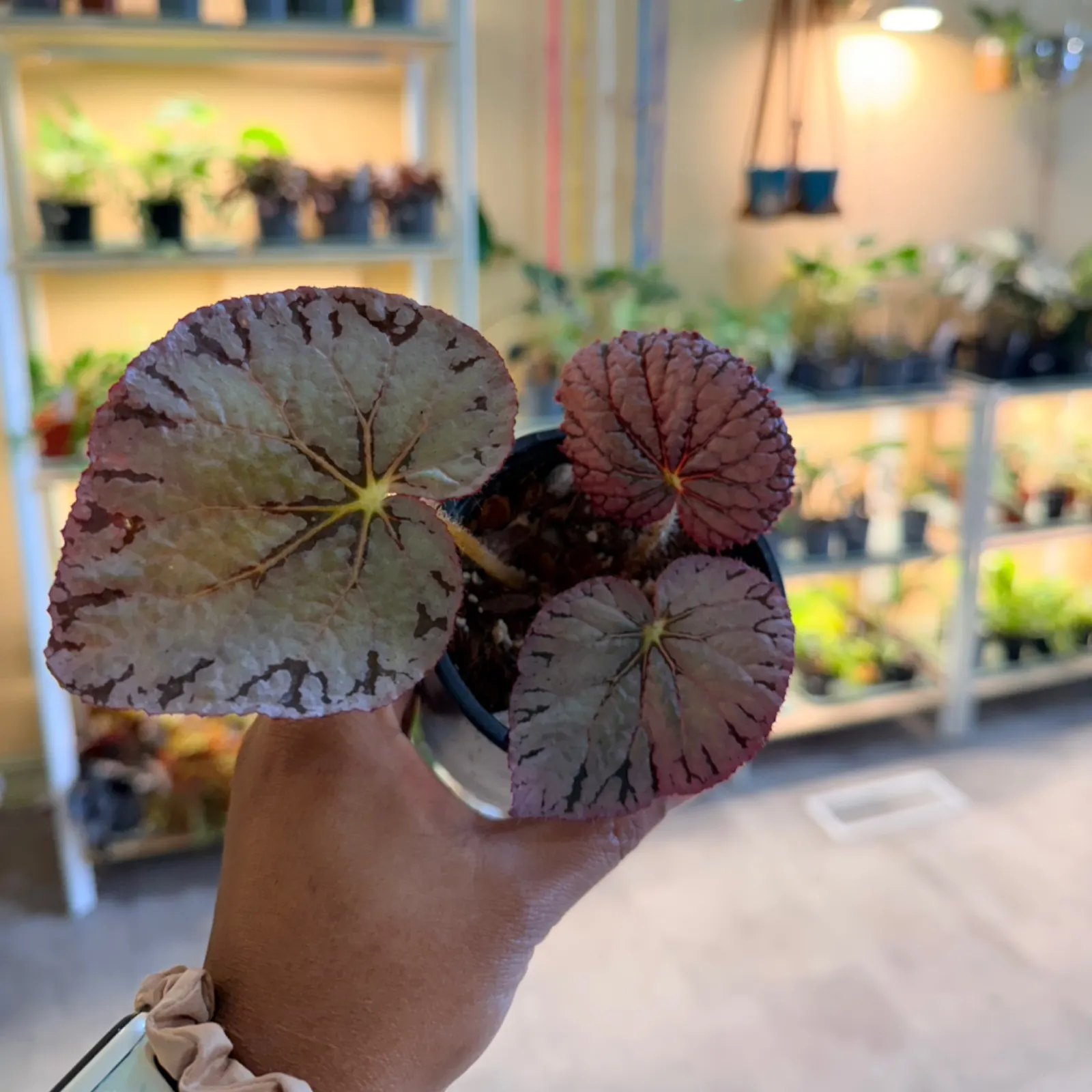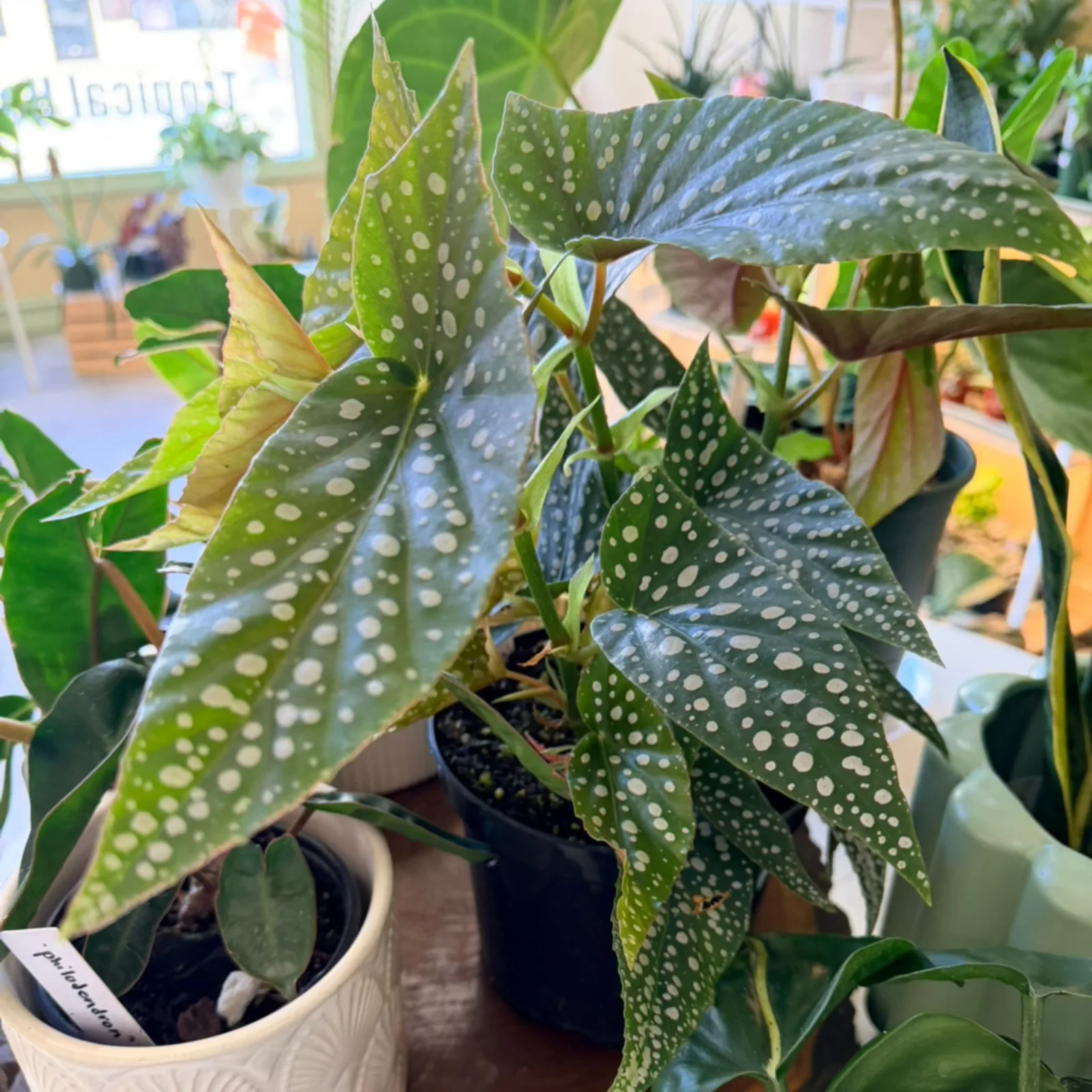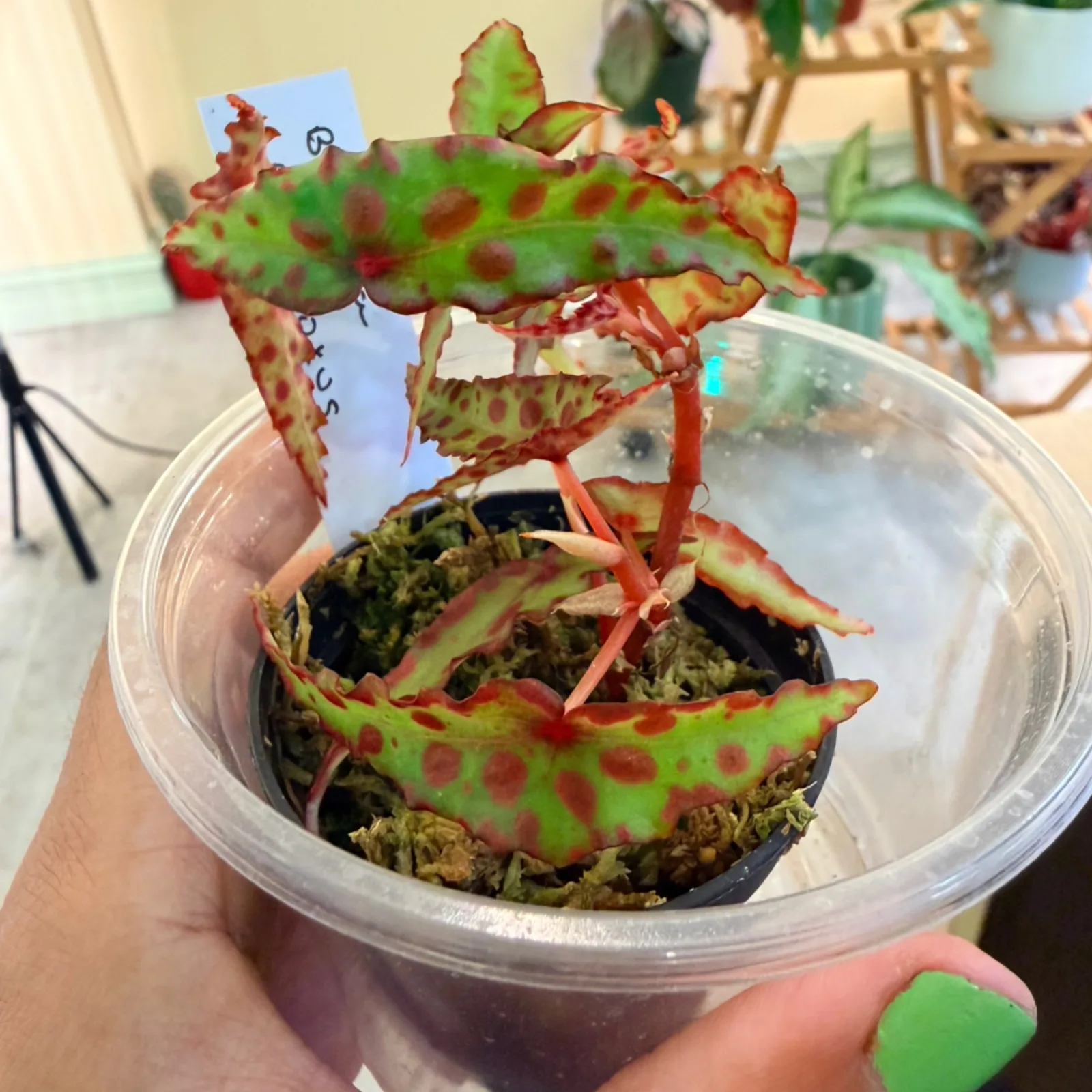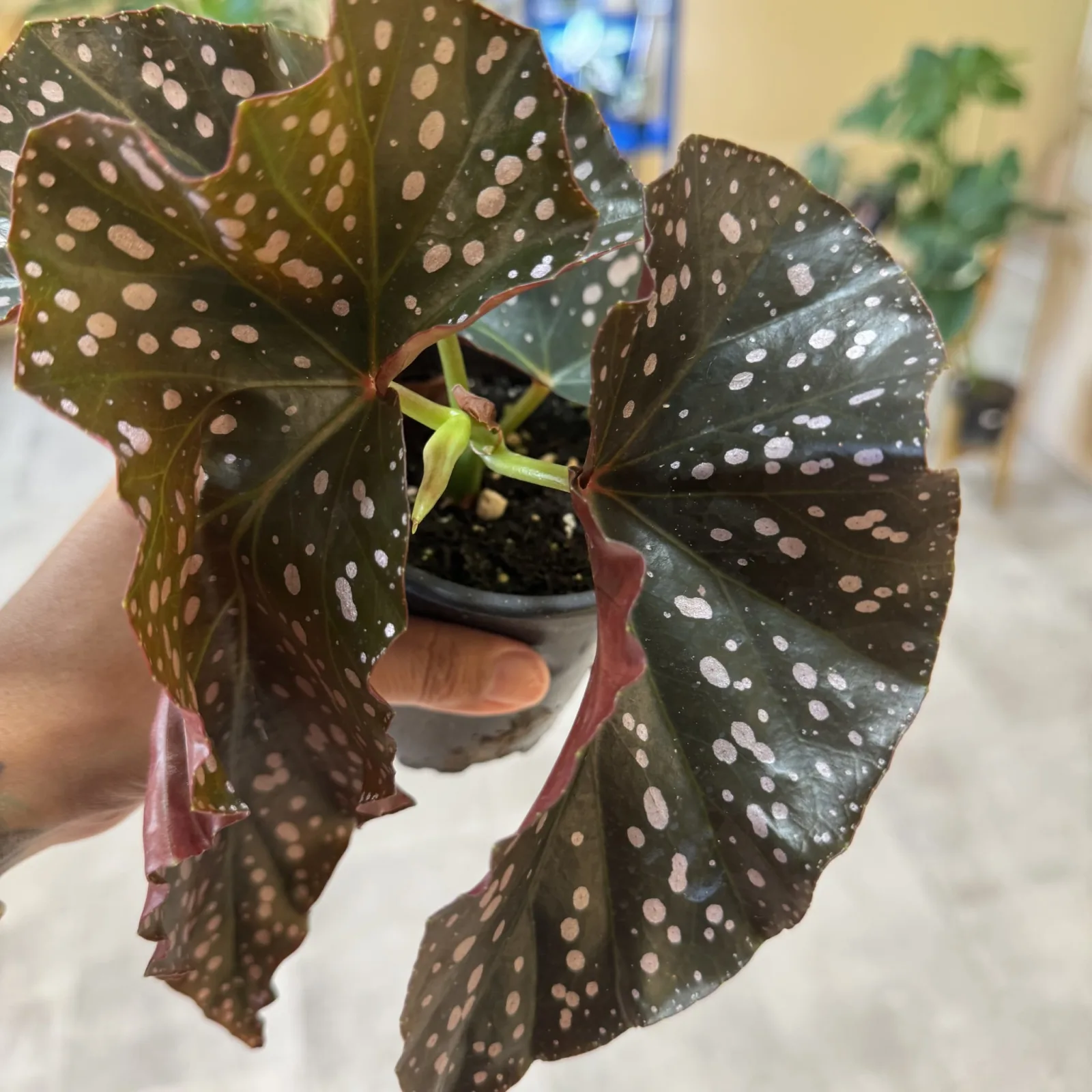
Sunlight
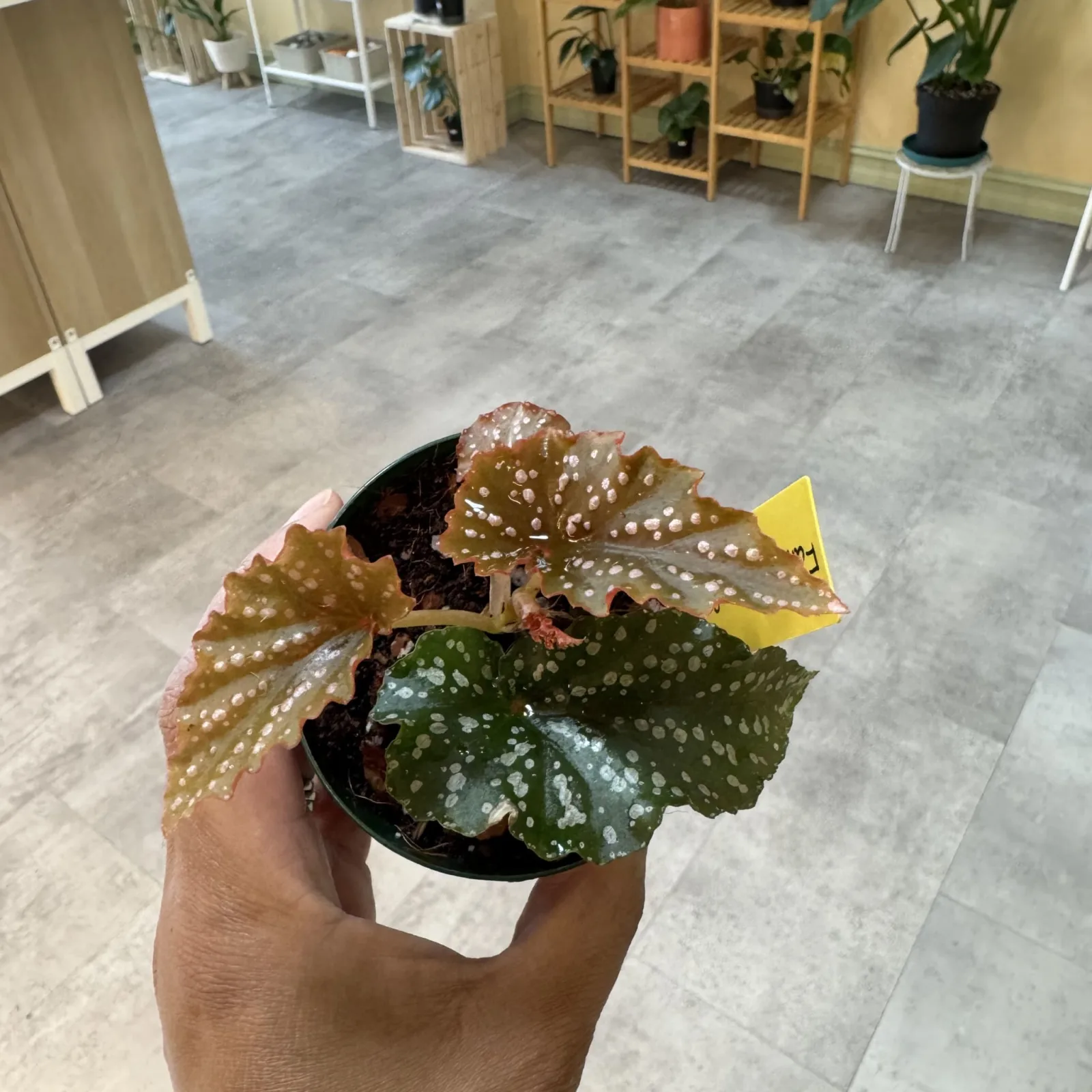
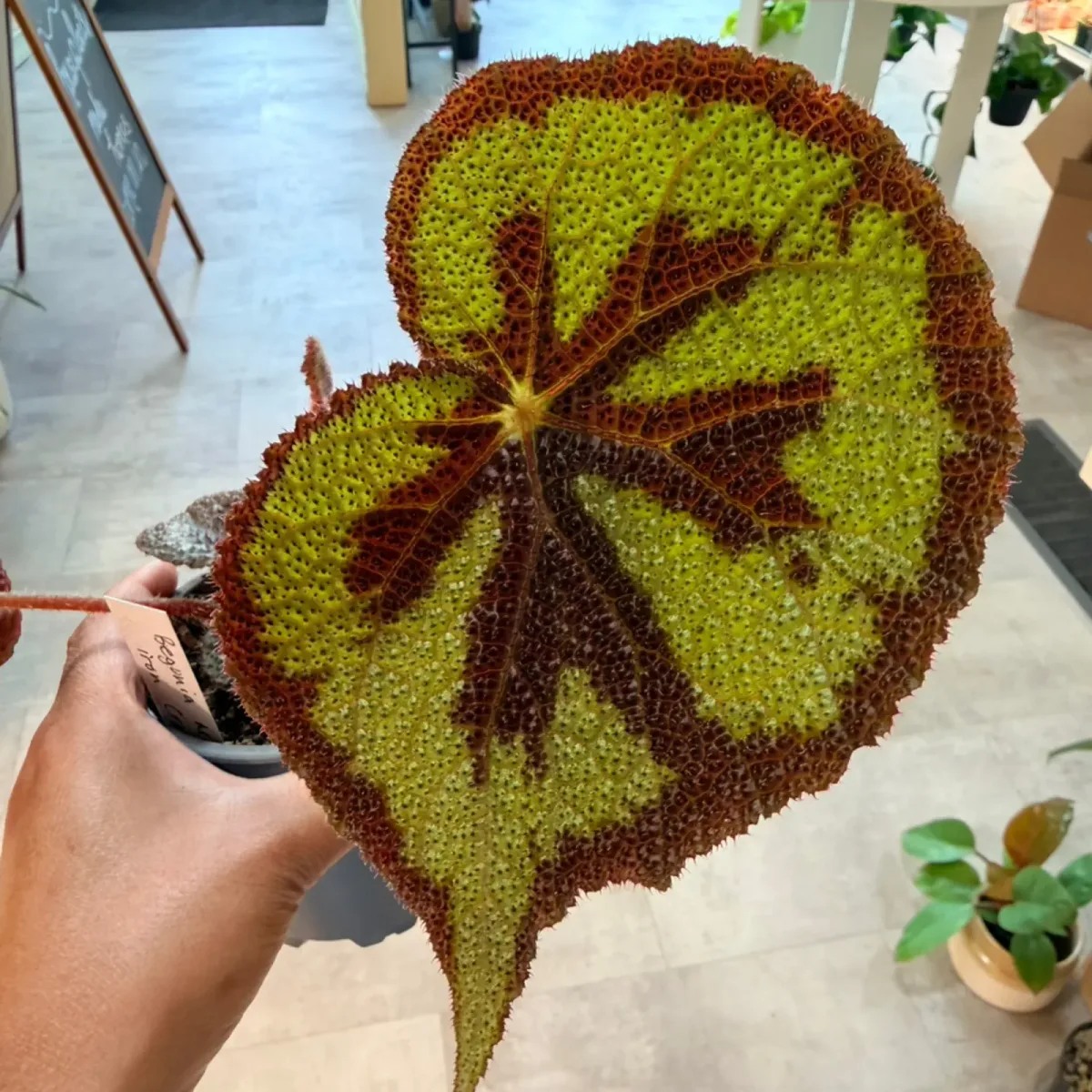
Begonias perform best in bright indirect light, such as a spot a metre or two back from a south- or east-facing window. Direct midday sun will scorch the leaves, while too little light causes leggy growth and reduced flowering. Rex and foliage types can tolerate slightly lower light than flowering varieties, but all appreciate good ambient brightness.
Water
Water when the top half of the soil is dry, then water thoroughly and allow the pot to drain completely. Begonias are sensitive to both overwatering and sitting in soggy soil, so never let the roots stand in water. Reduce watering frequency in winter when growth naturally slows, and avoid getting water on the leaves, which can encourage powdery mildew and unsightly spotting.
Toxicity
Toxic to cats and dogs. Begonias contain soluble calcium oxalates, with the highest concentration found in the roots and tubers. Ingestion can cause drooling, vomiting, and difficulty swallowing in pets. If you suspect your pet has eaten any part of a Begonia, contact your veterinarian or nearest emergency animal hospital immediately.
Common Problems
Powdery mildew is a frequent issue, particularly when air circulation is poor or water sits on the foliage; space plants well and water at the base to reduce risk. Overwatering is the leading cause of decline, producing yellowing leaves, mushy stems, and root rot. Mealybugs and fungus gnats are common pests; treat mealybugs with isopropyl alcohol on a cotton swab and address fungus gnats by allowing the soil to dry more thoroughly between waterings.