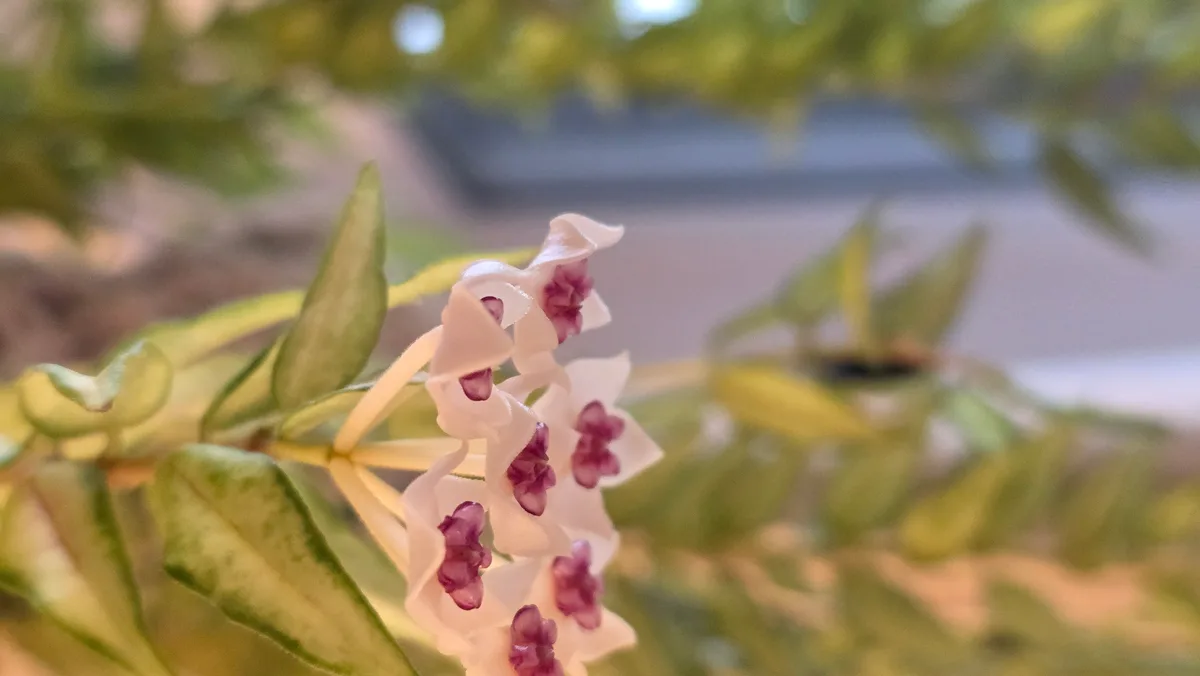
Sunlight
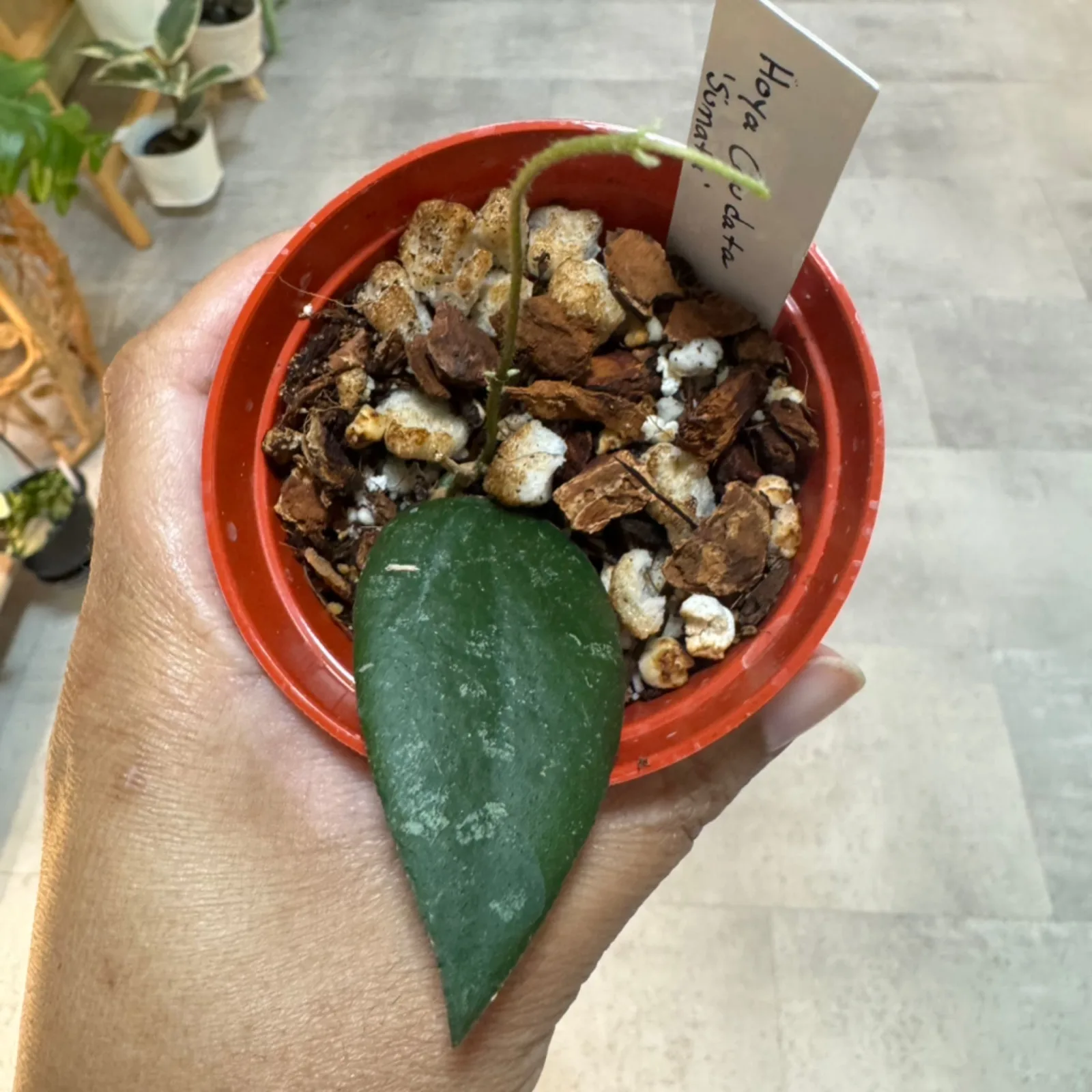
Hoya prefer bright indirect light and will reward you with the most vigorous growth and the best chance of blooming near a bright east- or west-facing window. They tolerate lower light but rarely flower in dim conditions. Avoid harsh direct midday sun, which can scorch and bleach the foliage.
Water
Water when the soil is dry almost all the way down, as Hoya store moisture in their thick leaves and are far more tolerant of underwatering than overwatering. During active growth in spring and summer, water more frequently; cut back noticeably in fall and winter. Always use a pot with drainage and empty the saucer after watering to prevent root rot.
Toxicity
Non-toxic to cats, dogs, and humans. Hoya are a genuinely pet-safe choice, making them a great pick for homes with curious cats or dogs. As with any houseplant, a pet that eats a large amount of foliage may have mild, temporary stomach upset, so contact your veterinarian or nearest emergency animal hospital if you have any concerns.
Common Problems
Hoya are generally low-maintenance, but mealybugs are a frequent pest to watch for, hiding in leaf axils and along stems; treat promptly with isopropyl alcohol on a cotton swab or a neem oil spray. Overwatering is the leading cause of decline, resulting in yellowing leaves, mushy stems, and root rot, so err on the side of dry rather than wet. A Hoya that refuses to bloom is usually lacking sufficient light or has not yet reached maturity; moving it closer to a bright window and practising patience tends to solve both.