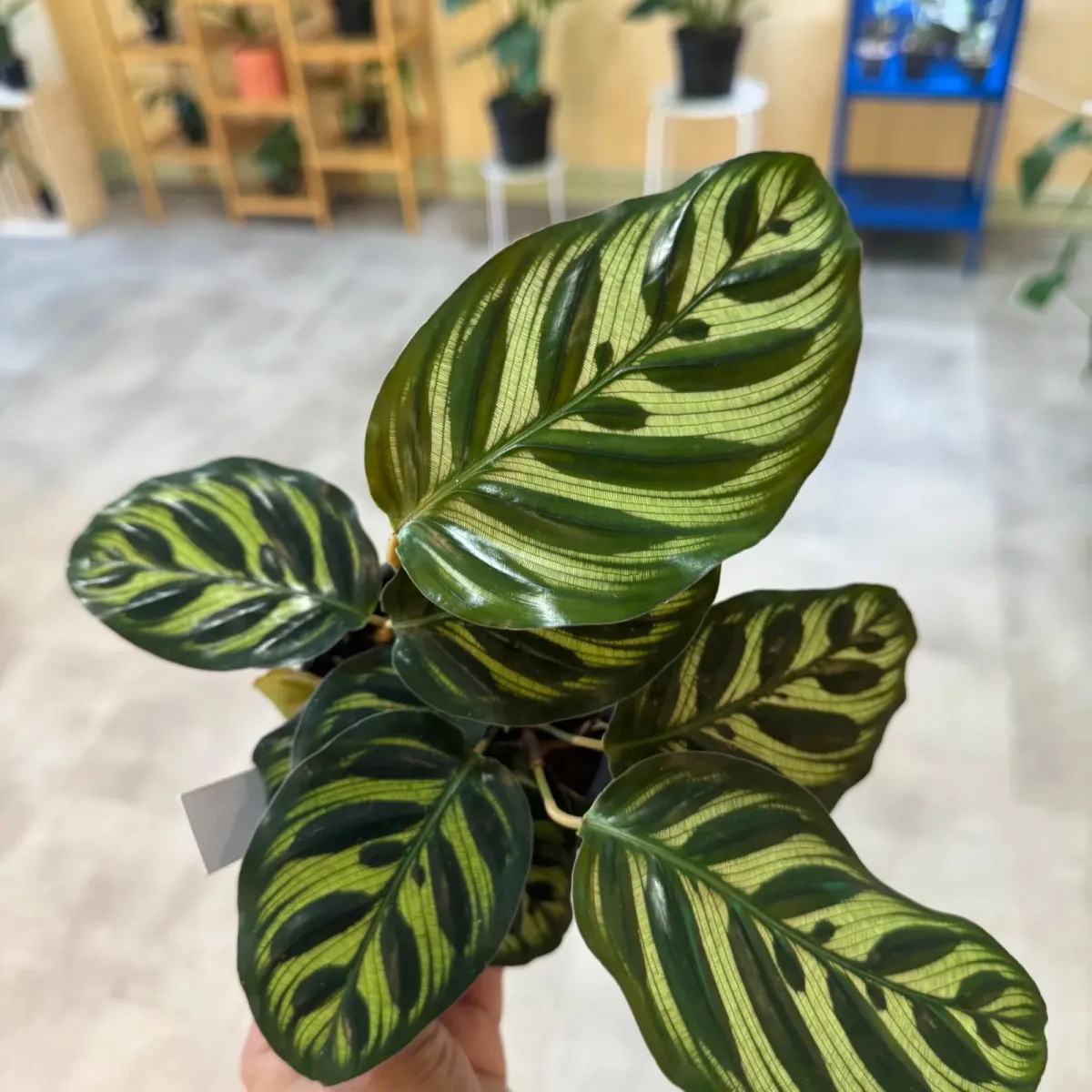
Sunlight
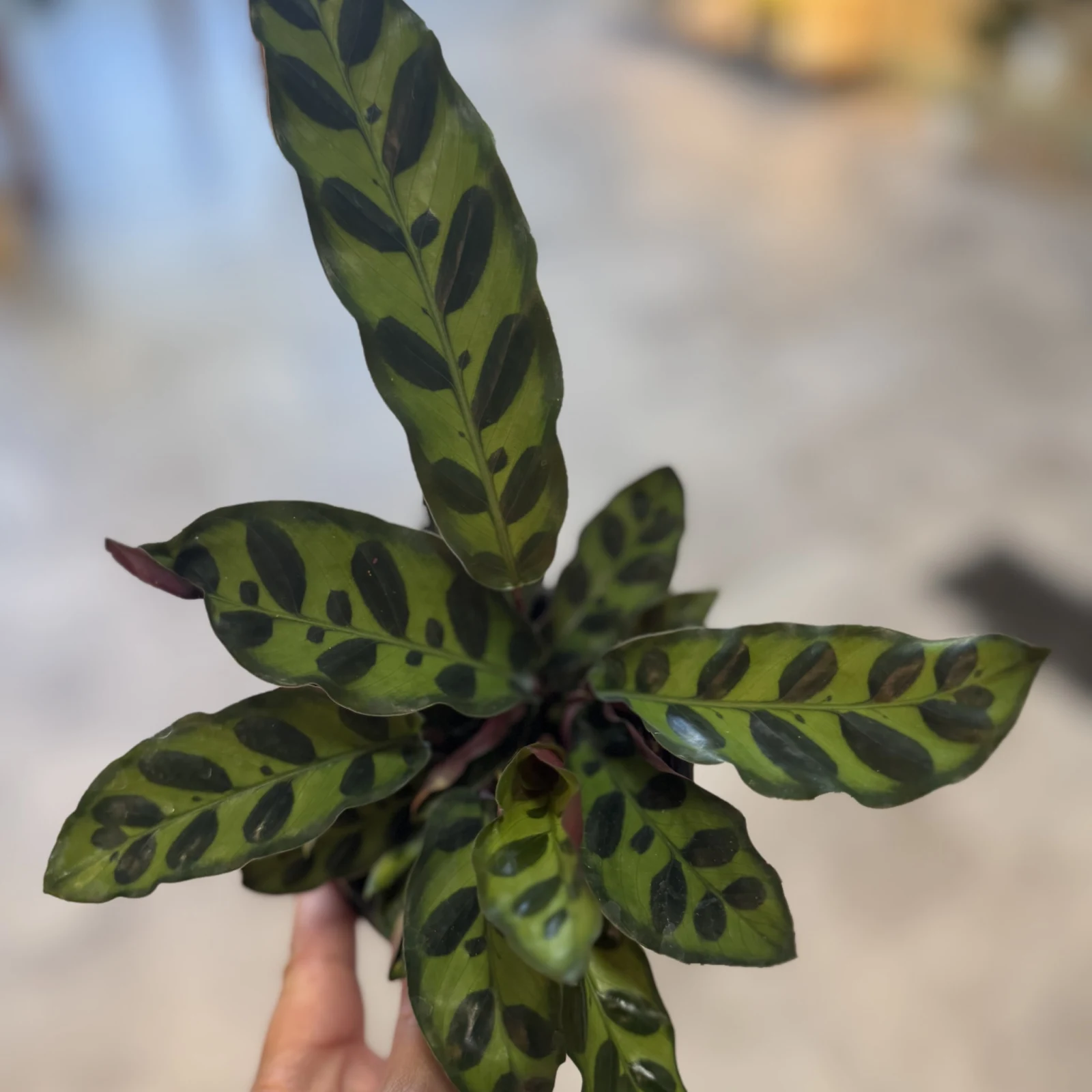
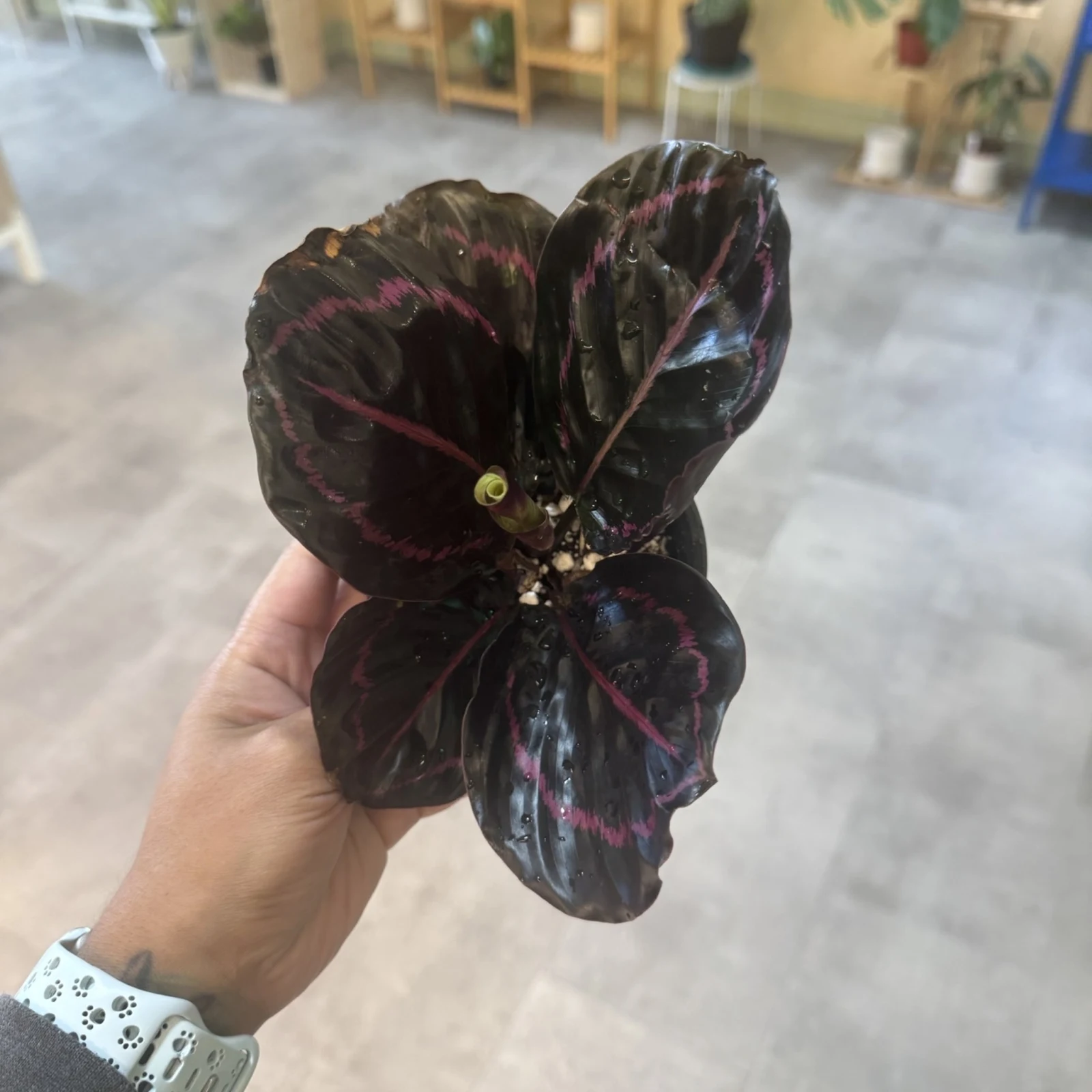
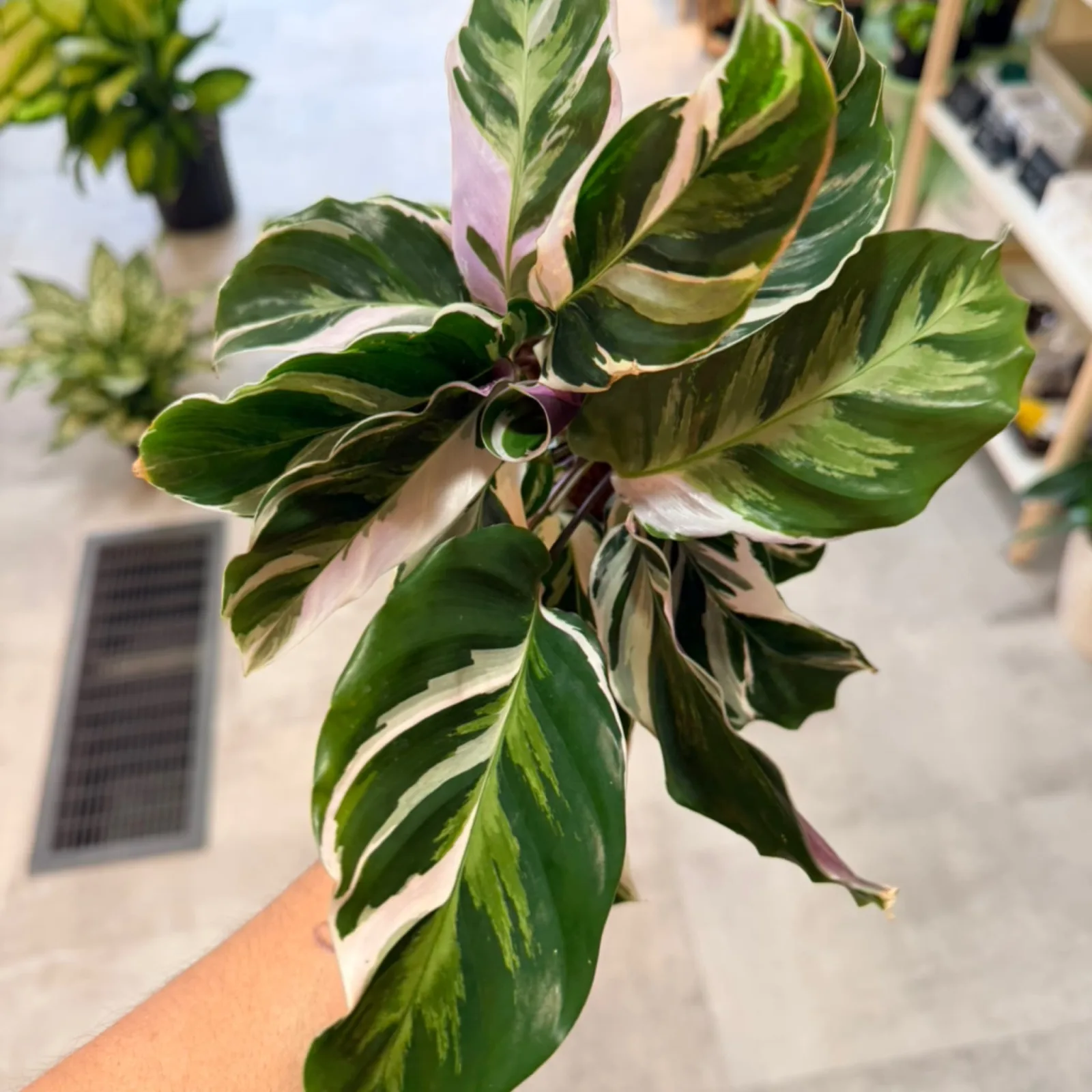
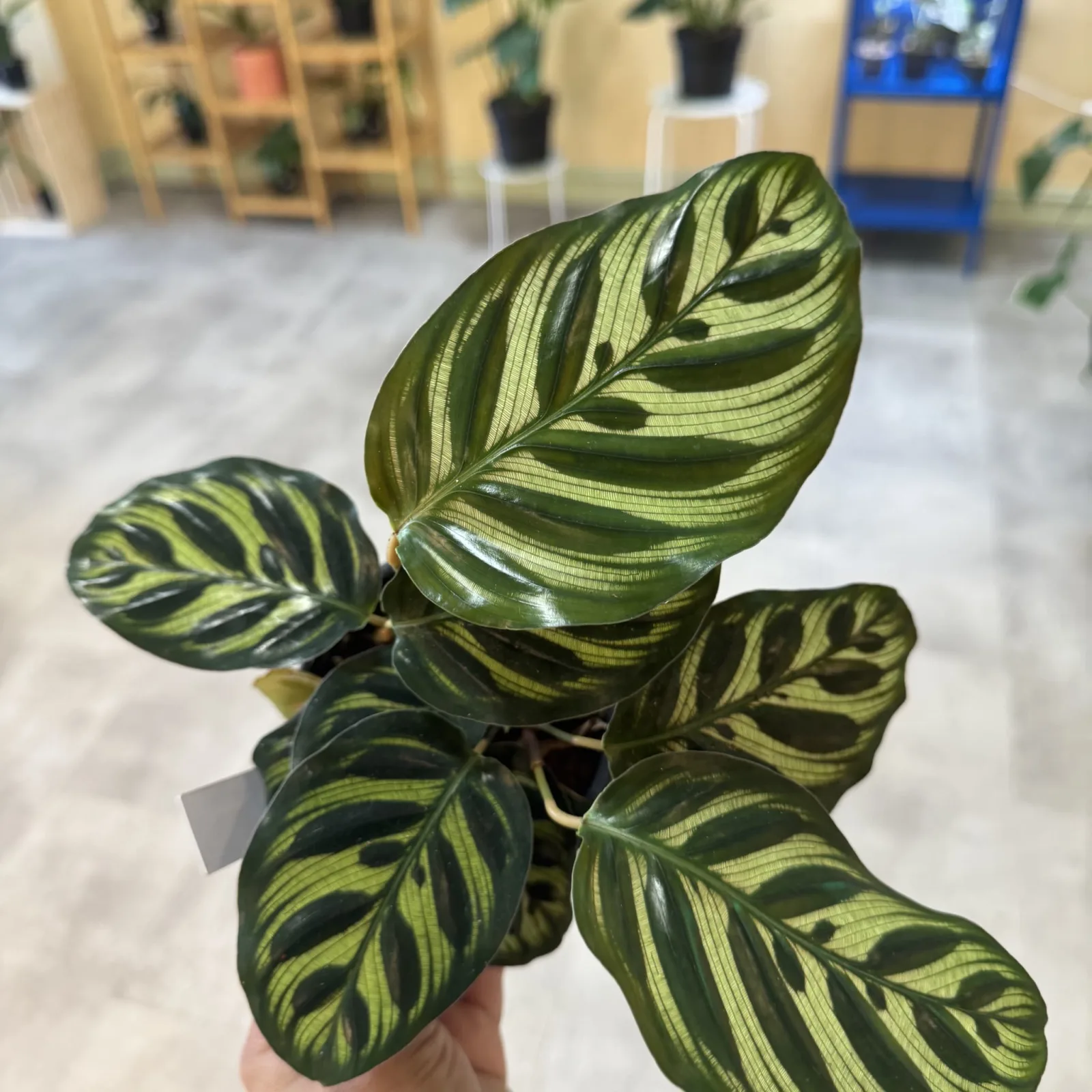
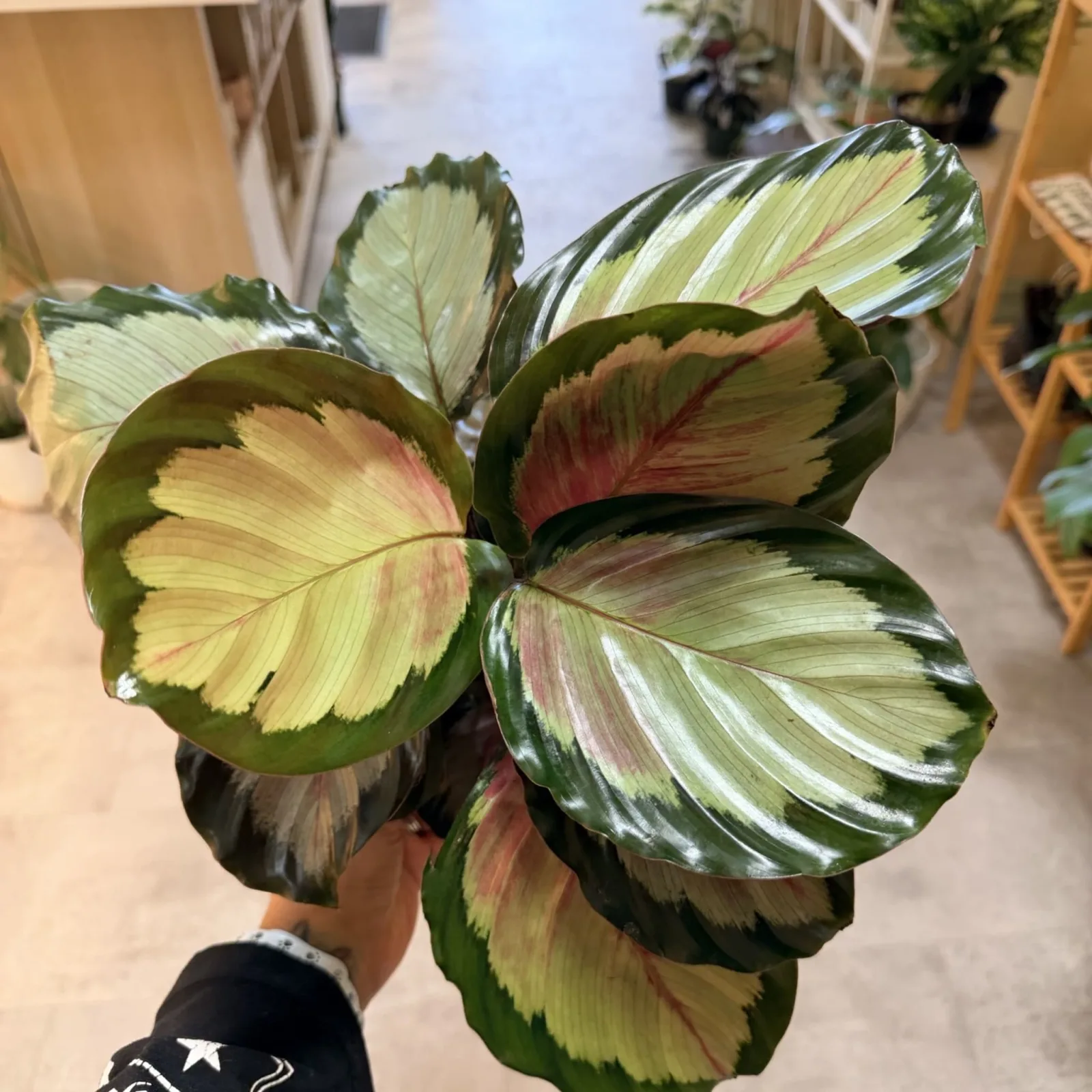
Calathea thrive in medium to bright indirect light, well away from direct sun, which fades and scorches their decorative foliage. A north- or east-facing window is ideal, or a spot set back from a south- or west-facing window filtered by a sheer curtain. They can tolerate lower light conditions, though growth will slow and leaf patterns may become less vivid.
Water
Water when the surface starts to dry, about the top quarter of the pot, using filtered, distilled, or rainwater whenever possible. Calathea are sensitive to the fluoride and chlorine found in municipal tap water, which causes brown leaf tips over time. Keep the soil consistently moist but never waterlogged, and ensure the pot drains freely to prevent root rot.
Toxicity
Non-toxic to cats, dogs, and humans. Calathea is a pet-friendly choice for households with curious animals, and no harmful compounds have been identified in the foliage or stems. If a pet consumes a large quantity of any plant material, mild digestive upset is always possible, so contact your veterinarian or nearest emergency animal hospital if you have any concerns.
Common Problems
Brown, crispy leaf edges are the most frequent complaint and point to low humidity or fluoride in the water; run a humidifier nearby and switch to filtered water to see improvement. Yellowing leaves typically indicate overwatering or poor drainage, so let the soil dry slightly more between waterings. Calathea also attract spider mites in dry indoor air, especially during Canadian winters when heating systems reduce humidity; inspect the undersides of leaves regularly and treat early infestations with a neem oil spray.