What Is LECA?
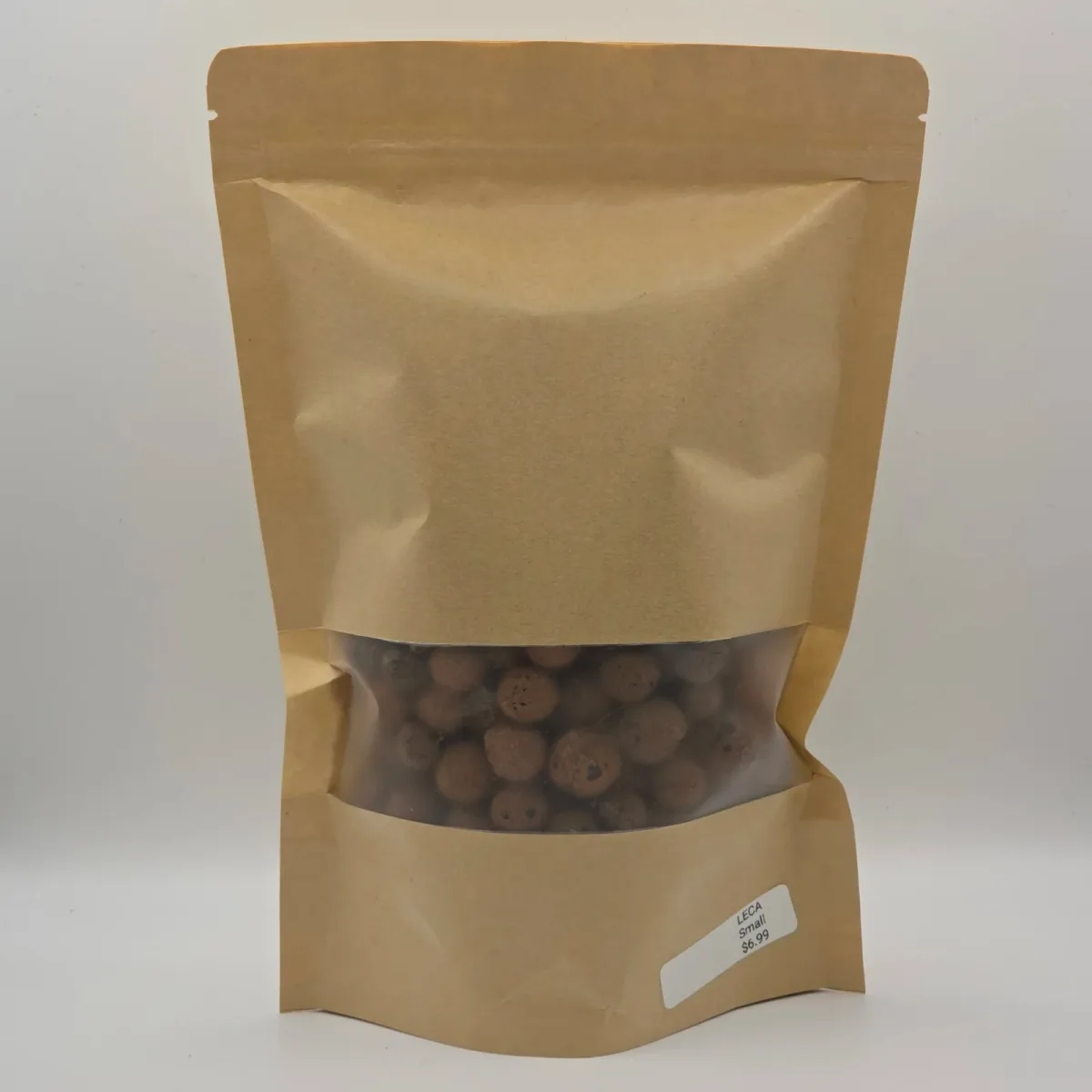
LECA stands for lightweight expanded clay aggregate. The pellets are kiln-fired until they puff into porous balls that wick moisture up from a reservoir while keeping plenty of air around the roots. Because the pellets are uniform and light-coloured, you can actually see root development through a clear nursery pot, which makes LECA a favourite among growers who enjoy watching their plants establish.
The main maintenance task with LECA is flushing. Mineral salts from fertilizer accumulate in the pellets over time, so a monthly rinse under lukewarm water keeps things balanced. Outside of that, the routine is straightforward: top up the reservoir, add a dilute nutrient solution, and let the plant drink at its own pace.
What Is PON?
PON is a pre-blended inorganic substrate, typically a mix of pumice, zeolite, and lava rock. Each component plays a role: pumice aerates, zeolite buffers nutrients and holds moisture evenly, and lava rock adds structure. The result is a medium that stays consistently moist without becoming waterlogged, which is especially useful for plants in small pots or for growers who do not want to monitor a reservoir as closely.
PON has a tidier, more soil-like appearance than LECA, and plants tend to sit very stably in it. It still requires fertilizing at every watering, but flushes are needed less frequently than with LECA because zeolite actively holds and releases nutrients rather than letting them pool.
Which Plants Do Well in Each?
Both media suit a wide range of popular houseplants, but there are some tendencies worth knowing.
LECA works particularly well for:
- Hoyas, which appreciate excellent airflow around their roots (browse our hoya collection or read the hoya care guide)
- Pothos and other fast-rooting vines
- Philodendrons, especially climbing varieties that benefit from visible root monitoring (see the philodendron care guide)
- Any plant where you want to catch root rot early
PON works particularly well for:
- Thirsty plants that dry out too fast in LECA
- Smaller pots where reservoir management is fiddly
- Growers who prefer a set-it-and-check-it-weekly approach
- Plants being converted from soil, since the moisture retention feels more familiar to the roots
How to Set Up Either Medium
The basic process is the same for both, and it is simpler than it looks.
- Rinse the medium thoroughly until the water runs clear. This removes dust and any loose particles.
- Use a nursery pot inside a cache pot, or a net pot if you prefer. The inner pot holds the medium; the outer pot acts as the reservoir.
- Fill the reservoir with a dilute nutrient solution. Start at roughly one quarter of the recommended fertilizer dose and increase gradually as the plant settles in.
- Keep the reservoir level low enough that the bottom centimetre or two of medium stays above the waterline. Roots need oxygen as well as moisture.
- Maintain good airflow around the plant, especially during the first few weeks after a soil conversion.
Converting a Soil Plant to Semi-Hydro
Yes, you can move an established soil plant into LECA or PON. The key is patience. Wash every trace of soil from the roots under lukewarm water, trim any mushy or dead roots cleanly, and then pot into your chosen medium with a very dilute nutrient solution. Give the plant slightly higher humidity for one to two weeks while it adjusts, and do not panic if it sulks briefly. New water roots will form, and growth typically picks back up within a month.
Supplies at My Jungle Roots
We carry both LECA and PON in the shop, along with the pots and tools that make a semi-hydro setup easy to manage. If you are in the Hanover area, come browse in person; if you are further afield in Ontario or anywhere else in Canada, we ship on Mondays so your order travels fresh and never sits in a depot over a weekend. Winter orders go out with heat packs. For delivery costs, see our shipping rates.