What Makes a Plant "Variegated"
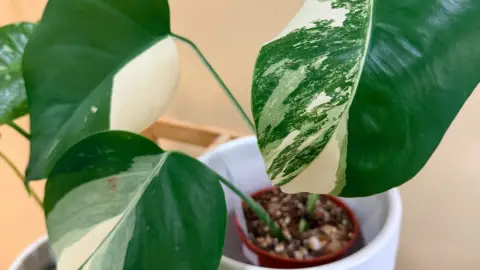
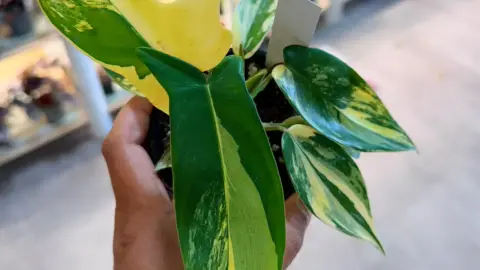
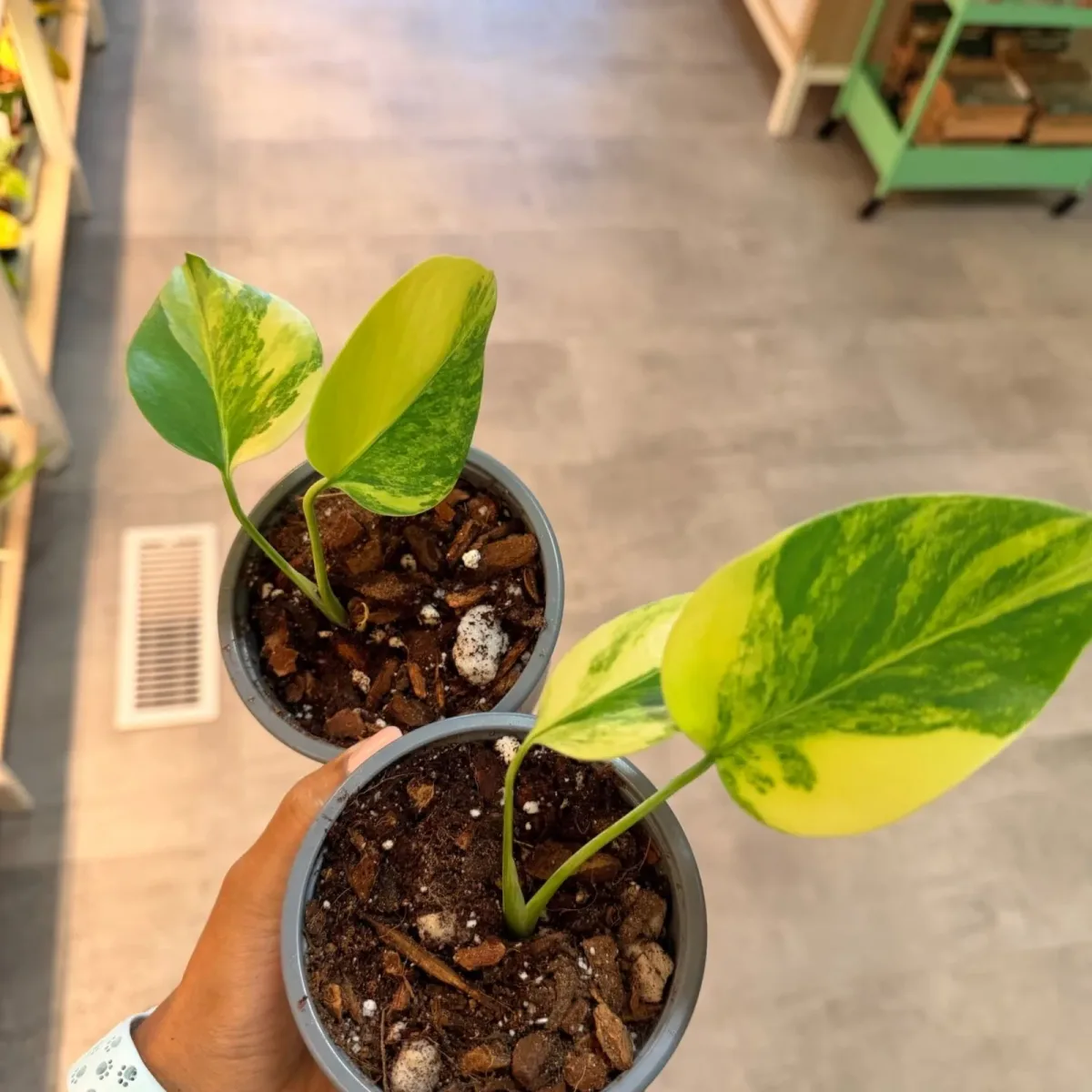
Variegation refers to patches, streaks, or sectors of the leaf that lack the green pigment chlorophyll, producing cream, white, yellow, or pink markings. In aroids, this usually happens through one of two mechanisms: a genetic mutation that is passed along through tissue culture or cuttings, or a chimeric instability where different cell lines coexist in the same plant. Chimeric variegation, the kind seen in Monstera Albo and Syngonium Albo, is famously unpredictable. One leaf may be almost entirely white; the next may be nearly solid green. That unpredictability is a feature, not a flaw, and it is a big part of what drives the obsession.
Every Leaf Is a One-Off
Because chimeric variegation cannot be reliably controlled, no two leaves on a variegated aroid are ever identical. Collectors who grow a Monstera Albo or a Syngonium Albo are essentially watching a slow, living performance unfold one leaf at a time. Some growers document every new leaf as it unfurls, sharing the reveal with online communities the way others might share a painting in progress. That sense of anticipation and surprise keeps the hobby deeply engaging long after the novelty of a new plant would normally wear off.
Why Supply Stays Limited
Variegated aroids grow more slowly than their all-green counterparts, because the white or cream sections of the leaf contain little to no chlorophyll and therefore produce less energy through photosynthesis. A plant running on reduced photosynthetic capacity simply cannot push out new growth as quickly. Propagation is also more demanding: a cutting must carry the variegated cell lines into the new plant, and there is always a chance a stem will revert to solid green. Tissue culture can stabilize some varieties, but for chimeric plants it remains unreliable. The result is a category of plants where supply genuinely struggles to keep pace with demand, even years after a variety first captures collector attention.
The Visual Impact Is Hard to Ignore
A single well-variegated aroid can anchor an entire room. The contrast between deep tropical green and bright cream or white reads as graphic and bold, even from across a space. Varieties like Monstera Thai Constellation, with its galaxy-like speckles, or the pink-flushed Syngonium Pink offer something that solid-green plants simply cannot: a pattern that shifts and evolves as the plant matures. For collectors who think carefully about how plants look together, variegated aroids provide a focal point that earns its place.
A Thriving Community Around the Hobby
Canadian plant swap groups, online forums, and local club meetups have built an active culture around variegated aroids. Cuttings change hands, propagation tips are traded, and growers celebrate each other's new leaves with genuine enthusiasm. This social dimension adds real value to the hobby beyond the plants themselves. Knowing that a cutting came from a specific grower's prized mother plant, or that a particular variety is circulating through a regional swap network, gives individual plants a kind of provenance that mass-produced houseplants rarely carry.
Caring for Variegated Aroids
The care requirements for variegated aroids are not dramatically different from their all-green relatives, but a few points are worth keeping in mind.
- Light: Bright indirect light is essential. Because variegated sections photosynthesize less efficiently, the plant needs the green portions to work harder. Dim conditions slow growth even further and can encourage reversion.
- Watering: Let the top layer of soil dry out before watering, and always use a pot with drainage. Root rot is a common casualty of overwatering in slow-growing plants.
- Humidity: Most aroids appreciate humidity above 50 percent. A pebble tray, grouping plants together, or a small humidifier all help.
- Toxicity: Monstera, Philodendron and Syngonium are all toxic to cats and dogs. Every aroid named in this article contains insoluble calcium oxalate crystals, so keep them out of reach of curious pets. If you want variegation without the worry, our pet-safe collection is curated separately.
For deeper guidance, our Monstera care guide, Philodendron care guide, and Syngonium care guide cover the details.
Where to Find Them in Canada
We carry variegated Monstera, Philodendron, and Syngonium varieties in our Hanover, Ontario shop, and we ship live plants on Mondays across Canada, with heat packs included during cold weather. If you are in Bruce County, Grey County, or surrounding areas, the shop is a 30-60 minute drive away. For everyone else, see our shipping rates before you order. Stock in the rare aroids category moves quickly, so checking back regularly is worth the habit.